

Universitas Gadjah Mada (UGM), located in Yogyakarta, Indonesia, is one of the country’s established public universities with a long history in veterinary education. Its Faculty of Veterinary Medicine offers a comprehensive academic environment combining scientific learning, practical training, clinical exposure and research in various areas of veterinary science.
For Malaysian students aspiring to become veterinarians, UGM provides an opportunity to pursue undergraduate and professional veterinary education in Indonesia.
1. A Long and Significant History in Veterinary Education
The history of modern veterinary education in Indonesia can be traced back to the early development of formal veterinary training in 1907. The institution subsequently developed into the Inlandsche Veeartsenijschool (IVS) in 1910 and the Nederlandsch-Indische Veeartsenijschool (NIVS) in 1914.
Following Indonesia’s independence, veterinary education continued to develop through successive institutional changes, eventually becoming part of Universitas Gadjah Mada when the university was established in 1949.
UGM’s Faculty of Veterinary Medicine has therefore inherited an important part of Indonesia’s veterinary education history.
One notable figure associated with the development of Indonesian veterinary education was Prof. Dr. Soeparwi, who contributed to the evolution of the profession’s terminology from Dokter Ternak (livestock doctor) to Dokter Hewan (veterinary doctor). This reflected a broader understanding of veterinary medicine as a profession concerned with animal health beyond livestock alone.
2. Dedicated Faculty of Veterinary Medicine
UGM has a dedicated Faculty of Veterinary Medicine responsible for undergraduate academic education, professional veterinary training and research.
The Faculty provides students with an academic environment covering the scientific foundations of veterinary medicine, animal health, disease diagnosis, treatment and prevention.
Through lectures, laboratory sessions, practical activities and clinical learning, students develop the knowledge and skills required for professional veterinary practice.
3. Strong Biomedical and Scientific Research Environment
Veterinary medicine is closely connected to biomedical science, animal biology, disease prevention and public health.
UGM provides opportunities for students to learn within a wider scientific and research environment. Areas of academic and research interest include animal diseases, infectious diseases, parasitology, veterinary pathology, physiology, animal health and veterinary public health.
This scientific foundation supports the development of analytical and diagnostic skills that are important in veterinary practice.
4. Prof. Soeparwi Veterinary Teaching Hospital
The Prof. Soeparwi Veterinary Teaching Hospital serves as an important clinical training and service facility associated with UGM’s Faculty of Veterinary Medicine.
The hospital supports veterinary clinical services, practical learning and professional training. Its clinical activities cover different categories of animals, including companion animals, livestock, exotic animals, aquatic animals, poultry and wildlife.
Exposure to a range of clinical cases helps students understand the practical application of veterinary knowledge in animal healthcare.
5. Broad Academic and Clinical Exposure
Veterinary Medicine covers many areas beyond the treatment of household pets. At UGM, students are exposed to different aspects of veterinary science, including:
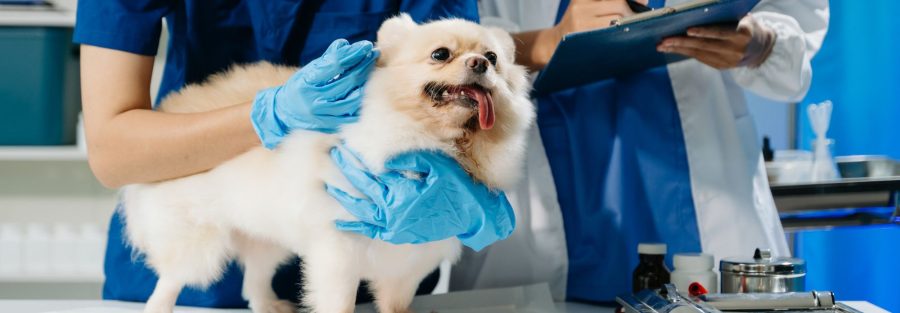
- Companion Animal Health and Clinical Practice: Health assessment, diagnosis, treatment and preventive care for dogs, cats and other companion animals.
- Livestock and Production Animal Health: Animal health management, disease prevention and healthcare for farm and production animals.
- Veterinary Pathology and Laboratory Diagnostics: Understanding diseases through laboratory investigations, tissue examination and diagnostic procedures.
- Infectious Diseases and Parasitology: Study of bacterial, viral, parasitic and other diseases affecting animals.
- Veterinary Public Health and Food Safety: The relationship between animal health, food safety and public health.
- Animal Reproduction and Preventive Healthcare: Reproductive health, breeding management and disease prevention.
- Biomedical Sciences and Related Research: Scientific research supporting the understanding of animal health, physiology and disease.
This broad academic exposure helps students appreciate the different responsibilities and career opportunities within the veterinary profession.
6. Aquatic Animal Health, Marine Mammals and Wildlife Research
UGM’s academic and research activities also extend to specialised areas of veterinary science, including aquatic animal health, marine mammals and wildlife.
Activities undertaken by the Faculty’s wildlife study group have included learning and practical exposure relating to fish and marine mammal health, disease awareness, parasites and selected diagnostic procedures.
The Faculty also has academic interests in wildlife physiology, including aquatic mammals. In addition, the Prof. Soeparwi Veterinary Teaching Hospital provides services covering categories such as aquatic animals and wildlife.
These activities reflect the wider scope of veterinary science and provide students with opportunities to learn about animal health beyond conventional companion and livestock practice.
7. Veterinary Medicine Programme Structure
The Veterinary Medicine programme at UGM generally consists of two stages:
Stage 1: Undergraduate Veterinary Education (S1)
The undergraduate academic stage takes approximately four years, subject to academic progress and university requirements.
Students study the scientific foundations of veterinary medicine, including anatomy, physiology, biochemistry, microbiology, pathology, parasitology, animal nutrition and other relevant subjects.
Stage 2: Veterinary Professional Education Programme (PPDH)
After completing the undergraduate stage, students proceed to the Program Pendidikan Profesi Dokter Hewan (PPDH), subject to the university’s requirements.
UGM’s professional veterinary education programme is approximately 56 weeks, or three semesters, according to the programme information discussed.
This stage focuses on professional and practical clinical training. Upon successful completion of the professional programme and fulfilment of the relevant requirements, including the prescribed oath ceremony, graduates receive the professional qualification Dokter Hewan (Drh.).
8. Recognition and Professional Registration in Malaysia
Recognition is an important consideration for Malaysian students planning to return home after graduation.
UGM’s Veterinary Medicine qualification is included in the relevant Malaysian qualification recognition records, including MQA’s eSisraf records. It is also listed in Part I of the Second Schedule to the Veterinary Surgeons Act 1974 (Act 147), which sets out qualifications relevant to professional registration in Malaysia.
The historical recognition framework dates back to 1975, when the Veterinary Surgeons Act came into force and the Second Schedule was amended with effect from 1 July 1975.
However, academic qualification recognition and professional registration are separate matters. Graduates intending to practise veterinary medicine in Malaysia must fulfil the applicable Malaysian Veterinary Council (MVC) registration requirements.
Students and parents should review the latest official records and requirements before enrolling, as regulatory requirements may be updated.
9. Returning to Malaysia: MVC Registration
Malaysian graduates intending to practise veterinary medicine in Malaysia should retain the academic and professional qualification documents obtained throughout their studies.
Depending on the applicable requirements, the documents submitted to MVC may include:
- Undergraduate Veterinary Medicine degree certificate and academic transcripts.
- Veterinary Professional Education Programme (PPDH) certificate and transcripts.
- Personal identification and supporting application documents.
- Proof of application payment.
Documents may be required in English and Indonesian, with certification where applicable. The exact checklist should be confirmed directly with MVC before submission.
10. Why Apply Through Medic Pro Link?
Established in 2004, Medic Pro Link Sdn Bhd has more than two decades of experience in student recruitment, university representation and placement in Indonesia.
We have represented and continue to work with leading Indonesian public universities, including UGM, IPB University, Airlangga University and other established institutions.
Our involvement includes official university representation, student recruitment, admission coordination and university selection test arrangements.
With our longstanding working relationships and experience in coordinating university selection tests, we provide guidance to Malaysian students and parents throughout the application and admission process.
Comprehensive Online Preparation for University Selection Tests
One of the key advantages of registering through Medic Pro Link is access to our structured online preparation classes for university selection tests.
Registered students receive preparation classes designed to help them understand relevant subjects, familiarise themselves with the selection test format and strengthen their academic readiness before the assessment.
Our experience in coordinating university selection tests enables us to guide students through the preparation process and provide a clearer understanding of the admission procedures.
These classes are intended to improve students’ readiness; admission remains subject to the university’s selection process and requirements.
Start Your Veterinary Medicine Journey at UGM
If you are considering Veterinary Medicine at Universitas Gadjah Mada, early preparation and a clear understanding of the admission process are important.
Contact Medic Pro Link Sdn Bhd to obtain information about the programme, admission requirements, selection test preparation, fees and student arrangements for the relevant intake.
Let us guide you through the steps towards pursuing your Veterinary Medicine degree in Indonesia.